
ADHD in Adults NZ (ADD): Symptoms, Causes & Diagnosis Guide (2025)
Last updated: 27 September 2025
Table of Contents
Video: The Mayo Clinic Radio discussing Adult ADHD.
🧠 What is ADHD in Adults?
Attention-Deficit/Hyperactivity Disorder (ADHD) is a neurodevelopmental condition that persists into adulthood for many people. While it is often recognised in childhood, long-term studies show that only a minority of children with ADHD experience full remission in adulthood. Around 10–20% continue to meet full diagnostic criteria, while an additional 40–60% still experience some symptoms and impairment into adult life
(Cambridge Neuropsychiatry Review). Adult ADHD can affect work, relationships, emotional regulation, and overall quality of life.
Research shows that ADHD affects approximately 5% of adults worldwide, yet many remain undiagnosed or untreated
(PLOS One – Comorbidity Review). In Aotearoa New Zealand, ADHD medication dispensing among adults increased
ten-fold between 2006 and 2022, but significant gaps in diagnosis and treatment remain
(NZ Medical Journal).
Left untreated, ADHD can contribute to long-term risks. A major study led by University College London, published in the
British Journal of Psychiatry, found that adults with ADHD face a reduced life expectancy of 4–11 years, largely due to higher rates of accidents, untreated mental health conditions, and substance use
(PubMed Central).
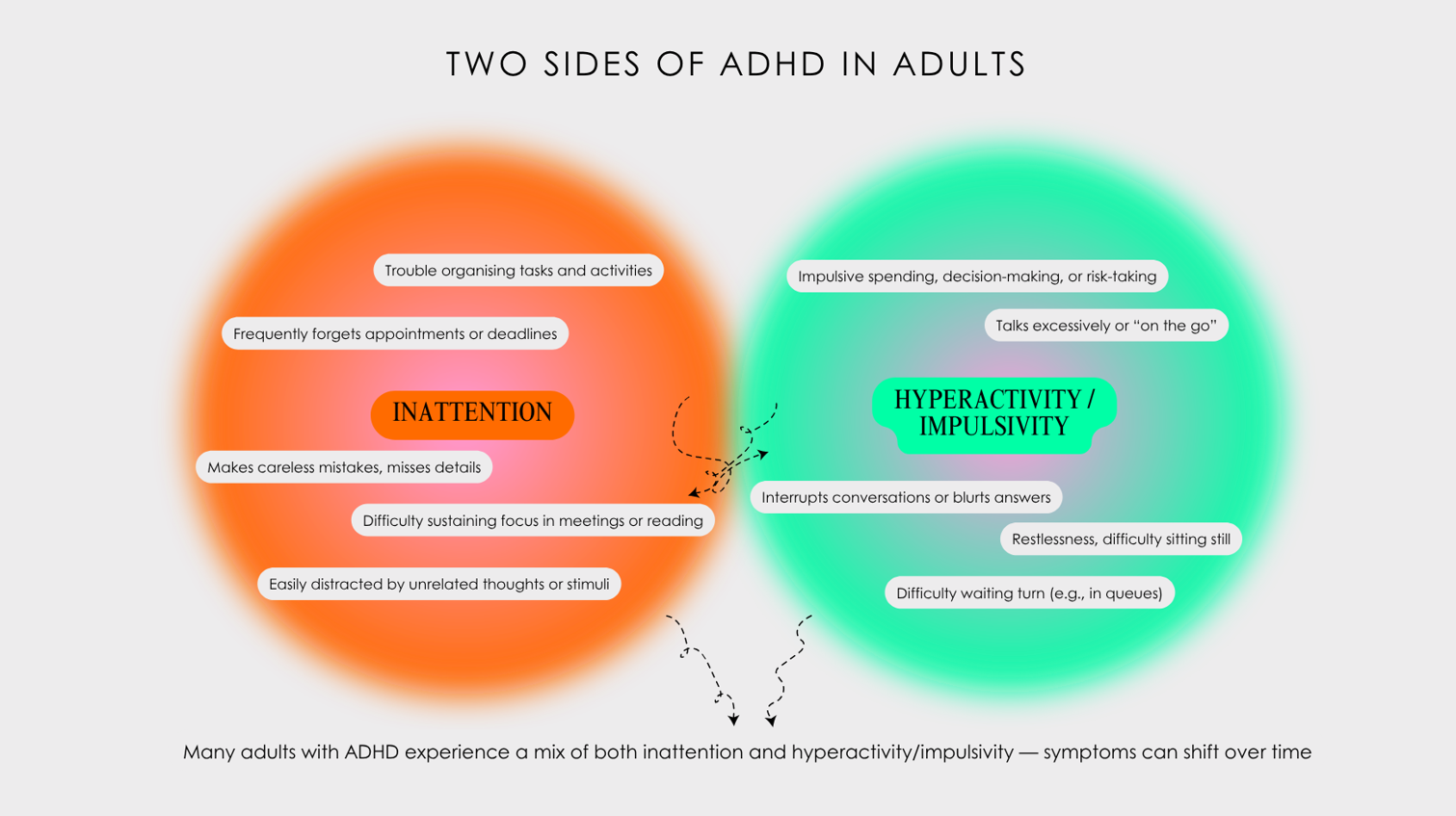
📋 ADHD in Adults: Symptoms (formerly called ADD)
ADHD was historically referred to as ADD (Attention Deficit Disorder). Today, ADD is considered an outdated term, but many adults still use it when searching for symptoms, assessments, or treatment. In this guide, we use ADHD and ADD interchangeably.
Core Symptoms
ADHD in adults goes beyond the stereotypes of being “distracted” or “hyper.” While difficulties with attention, organisation, and impulsivity are central, the condition often shows up in ways that are less commonly talked about. Adults may experience:
- Inattention and distractibility – losing focus at work, forgetting appointments, misplacing items, or leaving tasks half-finished.
- Hyperfocus – becoming so absorbed in a stimulating task (e.g., gaming, work projects, or hobbies) that basic needs like eating or sleeping are neglected.
- Poor organisation and time management – struggling to meet deadlines, pay bills on time, or keep routines consistent.
- Impulsivity – acting without thinking, interrupting conversations, overspending, or taking unnecessary risks.
Less often discussed, but equally significant, are the emotional and behavioural aspects of ADHD:
- Emotional dysregulation – intense frustration, sudden mood swings, or angry outbursts
(Journal of Affective Disorders). - Aggression and irritability – higher rates of verbal or physical aggression, especially with comorbid conditions
(CNS Spectrums). - Rejection sensitivity – feeling devastated by perceived criticism, sometimes called Rejection Sensitive Dysphoria.
- Poor self-care – neglecting sleep, hygiene, or nutrition.
- Relationship strain – forgetfulness or irritability misinterpreted as a lack of care.
Associated Conditions and Comorbidities
ADHD rarely occurs in isolation. Studies show that up to 80% of adults with ADHD have at least one additional psychiatric condition, most commonly depression, anxiety, personality disorders, or substance use
(PLOS One – Comorbidity Review).
There is also a strong link between ADHD and trauma. Systematic reviews show that 28–36% of adults with ADHD also meet criteria for PTSD, and this combination is linked to more severe impairment and complex treatment needs.
Several medical conditions can mimic ADHD symptoms, including sleep disorders and thyroid dysfunction
(Healthline – ADHD Misdiagnosis).
⚠️ Causes of ADHD in Adults & Risk Factors
The exact causes of ADHD in adults are not fully understood, but genetics play a major role. ADHD often runs in families, with heritability estimates around 70–80%
(Faraone & Larsson, 2019).
- Genetics – children of parents with ADHD are eight times more likely to be diagnosed.
- Neurobiology – differences in dopamine regulation and brain networks for attention and self-control.
- Perinatal risks – premature birth, low birth weight, or prenatal exposure to nicotine/alcohol.
- Early environment – exposure to high stress or trauma.
🔍 ADHD in Adults: Diagnosis and Testing in NZ
An ADHD test for adults is not a simple checklist — it is a comprehensive psychiatric evaluation that considers medical history, symptoms, and co-existing conditions.
In New Zealand, psychologists can provide assessments and reports useful for workplace or school accommodations, but only psychiatrists (and paediatricians for children) can prescribe ADHD stimulant medication.
(NZ Gazette).
Access to ADHD diagnosis through the public health system is limited, with long waitlists. For most adults, a private ADHD assessment in NZ with a psychiatrist is the fastest route to diagnosis and treatment options.
ADHD medication in NZ can only be initiated by these specialists under Special Authority criteria, which ensures prescriptions are clinically appropriate. Many patients may need to see both a psychologist (for assessment) and a psychiatrist (for medication), so choosing the right pathway early can save time and cost.
Living with symptoms of ADHD as an adult?
If you recognise some of these challenges in yourself, talking with a psychiatrist can help bring clarity and direction. The Specialists at MSQ Health provide comprehensive psychiatric assessments and advice so you can take the next step with confidence.